Account Log Book KDP Interior: Your Ready-to-Upload, Real-World Tool for Fast KDP Publishing
If you’ve ever stared at a blank screen wondering how to launch your next low-content book on Amazon KDP—without hiring a designer, wrestling with formatting, or waiting days for proofing—you’re not alone. The Account Log Book KDP Interior isn’t just another PDF template. It’s a field-tested, production-ready interior file built specifically for creators who want speed, flexibility, and reliability—without sacrificing professional quality.
What Exactly Is the Account Log Book KDP Interior?
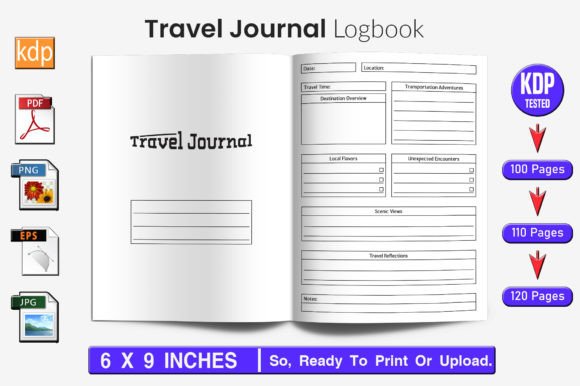
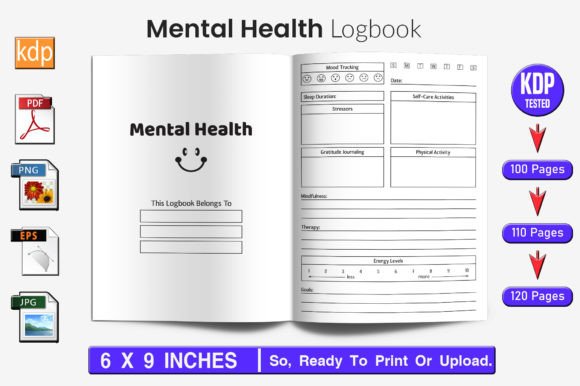
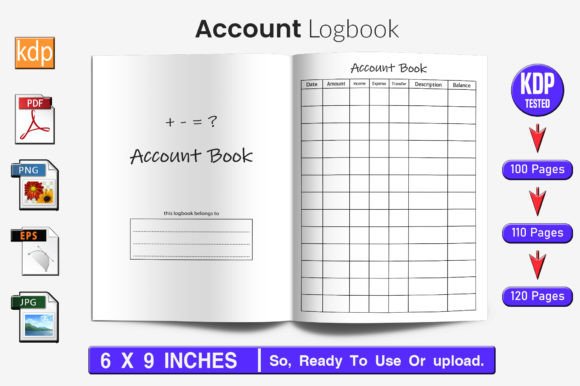
At its core, the Account Log Book KDP Interior is a 100-page (with optional 110- and 120-page versions) printable interior designed for account tracking, financial logging, inventory recording, or any structured data-entry need. But here’s what makes it different from generic logbook templates: every page is vector-based, fully editable in Adobe Illustrator, and pre-validated on Amazon KDP. That means no last-minute surprises—no bleed errors, no resolution warnings, no rejected uploads. You get a clean, print-ready PDF plus original EPS files, transparent PNGs, and high-res JPGs—all tested and confirmed to pass KDP’s strict upload requirements.
Real People, Real Situations Where This Interior Fits Like a Glove
Think of the Account Log Book KDP Interior as a quiet workhorse—not flashy, but dependable across dozens of everyday use cases.
- Small business owners tracking daily cash flow, client payments, or vendor invoices often start with simple notebooks—but those rarely scale. With this interior, they can publish a branded “Cash Receipt Log” or “Service Appointment Tracker” in under an hour. One user launched a niche logbook for dog groomers (“Grooming Session Log”) using the 120-page version, added custom headers in Illustrator, and had it live on Amazon within two days.
- Freelancers and solopreneurs juggling multiple clients benefit from the clean, uncluttered layout. No distracting graphics—just consistent spacing, clear column headers, and room for notes. A freelance web developer used the editable vector pages to build a “Project Time & Expense Tracker,” resizing tables to fit hourly breakdowns without pixelation.
- Educators and trainers building supplemental classroom tools love that the interior supports handwriting *and* light digital annotation. A homeschool mom repurposed the 6×9 trim size into a “Science Lab Observation Log,” adding her own icons in Illustrator and uploading the final PDF directly to KDP—no third-party formatter needed.
- Creative professionals launching companion journals (like “Creative Contract Tracker” or “Music Lesson Log”) appreciate the transparency of the PNG files. They drop their logo onto the cover, layer it over the interior’s first page, and maintain full control over branding—without needing Photoshop expertise.
Why “KDP Tested” Isn’t Just Marketing—It’s Peace of Mind
“KDP tested” means someone already uploaded this exact file—same DPI, same bleed settings (none), same trim size (6×9 inches)—and watched it sail through Amazon’s automated checks. That matters because KDP’s system rejects interiors for subtle things: inconsistent margins, embedded fonts that don’t embed properly, or RGB images slipping into CMYK workflows. The Account Log Book KDP Interior sidesteps all that. Its 300 DPI resolution ensures crisp text and lines—even when printed on standard KDP paper. And because it’s vector-based, resizing a single page to fit a custom notebook line or adjusting column width for longer entries won’t blur or distort anything.
Who Benefits Most—and Who Might Want to Pause First
This interior shines for creators who value speed + control. If you’re launching multiple logbooks per month—or testing niches like “Restaurant Health Inspection Log” or “Apartment Maintenance Tracker”—having a plug-and-play interior cuts your production time by 70% or more. You’re not rebuilding grids from scratch; you’re adapting proven structure.
That said, it’s worth noting a few practical considerations:
- You’ll need basic familiarity with Adobe Illustrator or similar vector software to unlock full customization. While the PDF is ready to upload as-is, editing headers, changing fonts, or adding logos requires opening the EPS file—not just a PDF editor.
- It’s purpose-built—not decorative. There are no watercolor textures, hand-drawn borders, or themed illustrations. That’s intentional: this is for users who prioritize function, clarity, and consistency over visual flair.
- No pre-written content or prompts. This is a blank-slate interior. You bring the niche, the audience, and the voice—the interior brings the reliable framework.
How It Fits Into Your Broader KDP Workflow
Many creators treat low-content publishing like assembling furniture: buy the parts (cover, interior, description), then bolt them together. The Account Log Book KDP Interior is the most time-consuming part of that assembly—so having it pre-cut, pre-sanded, and pre-drilled changes everything. Pair it with a Canva-designed cover (using the included JPGs as references), write a tight, keyword-rich description (“account log book for small business,” “printable expense tracker journal,” “KDP interior for finance logbook”), and you’re looking at a full product launch in under three hours.
One creator reported launching seven different logbooks in one week—each targeting a micro-niche (e.g., “Bakery Ingredient Inventory Log,” “Tattoo Artist Appointment Log”)—all using variations of the same interior. She changed only the title page, header text, and column labels. No new design work. No formatting rework. Just smart reuse.
Final Thought: It’s Not About Filling Pages—It’s About Solving Problems
The best low-content books don’t exist to occupy shelf space—they exist to solve small, specific problems for real people. A nurse tracking patient vitals. A landscaper logging job sites and materials used. A teacher recording student behavior interventions. The Account Log Book KDP Interior gives you the structural foundation to serve those needs quickly and professionally. It doesn’t promise viral success—but it does promise fewer roadblocks, faster iterations, and more confidence each time you hit “Publish.”