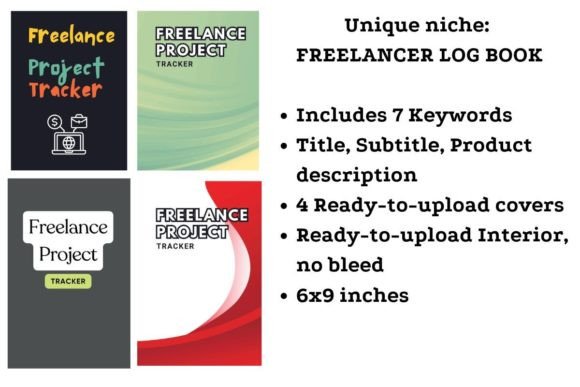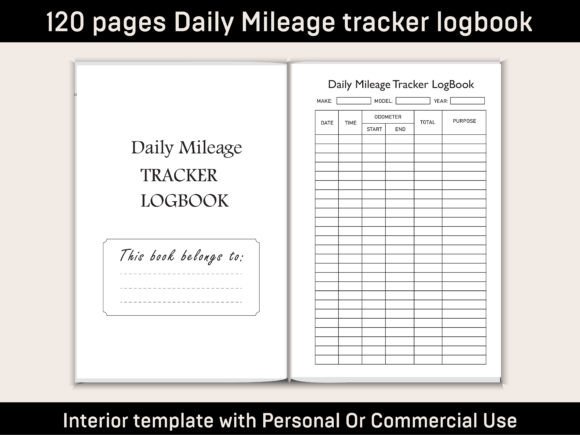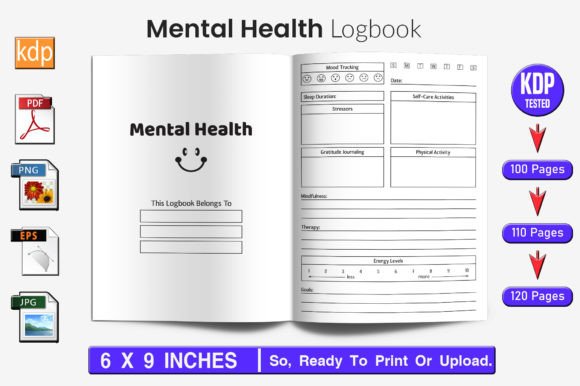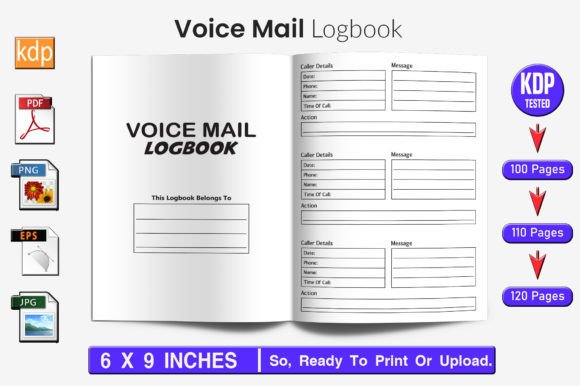
Family History Tracker KDP Interior
If you're building a low-content publishing business on Amazon KDP—and doing it profitably and sustainably—the Family History Tracker KDP Interior isn’t just another template. It’s a tested, production-ready asset designed for speed, flexibility, and compliance. Unlike generic notebooks or untested PDFs that trigger KDP rejections or formatting headaches, this interior is engineered to pass Amazon’s strict print requirements the first time—every time.
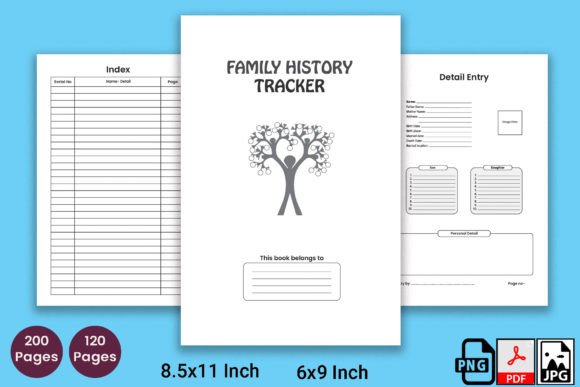
At its core, the Family History Tracker KDP Interior is a 100% vector-based, fully editable PDF built specifically for genealogists, family historians, educators, and KDP entrepreneurs who want to launch high-intent, niche journals without writing a single word. It’s not filler—it’s functional. And because it’s built with Adobe Illustrator compatibility in mind, resizing isn’t guesswork. You can scale from 6×9 inches (ideal for portable paperback journals) to 8.5×11 inches (perfect for classroom handouts or archival reference books) without pixelation or layout collapse.
Why This Interior Stands Out in a Crowded Niche
Most family history trackers on KDP are either too sparse (just blank pages), too rigid (non-editable raster PDFs), or riddled with bleed errors that delay approval. The Family History Tracker KDP Interior solves all three problems at once:
- No bleed design — meets KDP’s exact margin specifications out of the box.
- Fully editable vector layers — change fonts, colors, headers, or page counts without losing resolution.
- 100% KDP-tested — uploaded, reviewed, and published successfully across multiple accounts and categories (Genealogy, Journaling, Family Records).
That last point matters more than most creators realize. “Tested” here doesn’t mean “uploaded once.” It means real-world validation: no cropping issues on KDP’s previewer, no font substitution warnings, no unexpected page shifts during softcover conversion. You’re not debugging—you’re deploying.
Real-World Use Cases Beyond the Obvious
Yes, it works beautifully as a standalone family tree journal. But its versatility extends further—especially for creators thinking beyond passive sales.
Educators use it to build custom classroom resources: students document oral histories, map ancestral migration patterns, or compare immigration timelines across generations—all while reinforcing research, critical thinking, and narrative skills. Because the interior supports both 6×9 and 8.5×11 formats, teachers can assign compact personal journals *and* create larger presentation-ready binders.
Genealogy bloggers and podcasters bundle it as a premium digital download (with editable PDF + high-res JPG/PNG versions included). Readers get immediate value—not just content, but a tool they can personalize, print, and annotate. That builds loyalty far more effectively than static checklists.
Freelance designers and branding studios integrate it into white-label service packages. Need a custom family legacy book for a client? Drop their logo into the cover, tweak the header fonts, adjust the color palette—and deliver a cohesive, print-ready product in under an hour. The vector foundation makes those edits precise and non-destructive.
What You Actually Get—No Surprises
The package includes more than just a PDF. You receive:
- A print-ready PDF (no bleed, CMYK-ready, embedded fonts)
- A fully layered, vector-based AI file (Adobe Illustrator CC 2020+ compatible)
- High-resolution JPG and PNG exports (300 DPI, ideal for mockups, ads, or social previews)
- Three distinct page types: pedigree charts, timeline grids, and open-entry lineage logs—each optimized for clarity and usability
- 120-page and 200-page versions—giving you flexibility for different price points and market segments
Note: All designs are original. There are no stock clipart elements, no recycled layouts, and no placeholder text that violates KDP’s content policies. Every line, grid, and label was drawn and tested in-house by designers with 5+ years of print-on-demand experience.
Smart Implementation Tips (From Creators Who’ve Done It)
If you’re scaling a KDP business, small decisions compound fast. Here’s what seasoned publishers recommend when using the Family History Tracker KDP Interior:
- Start with one size, one page count. Launch your first version at 6×9 / 120 pages. It’s the sweet spot for discoverability, printing cost, and buyer expectations in the genealogy niche.
- Add subtle differentiation in your title and subtitle. Instead of “Family History Tracker,” try “Family History Tracker: Ancestry Journal for Beginners” or “Family History Tracker: Civil War Era Lineage Log.” Small tweaks like these align with long-tail search behavior and reduce competition.
- Use the included JPG/PNG files to create authentic lifestyle mockups. Show the journal beside a vintage photo album, a cup of coffee, and handwritten notes—not just a flat white background. Real context increases conversion.
- Don’t skip the interior preview. Even with a KDP-tested file, always generate and review Amazon’s online preview before publishing. It catches subtle alignment issues specific to your account’s settings.
And one final note: vector doesn’t mean “complicated.” You don’t need Illustrator mastery to make meaningful changes. Swapping a font, adjusting line weight, or updating a header label takes minutes—not hours—once you know where the editable layers live. The documentation (included in the download) walks through exactly which layers control what.
Who Benefits Most—and Why Timing Matters
This isn’t just for people launching their first KDP book. It’s especially valuable for creators already in the space who are hitting plateaus: slower rank growth, higher ACOS on ads, or diminishing returns from broad-topic journals. The Family History Tracker KDP Interior lets you pivot into a higher-intent, lower-competition segment—where buyers actively search for tools, not just inspiration.
Consider this: “family history journal” has steady, year-round search volume. It spikes around holidays (Mother’s Day, Thanksgiving), back-to-school season, and even during major historical anniversaries (e.g., Ellis Island centennials). With a production-ready interior, you can test seasonal variations—“Irish Immigrant Family History Tracker” or “African American Genealogy Journal”—in days, not weeks.
That agility compounds. One creator recently launched three variants in six weeks using this interior. Two ranked on page one for their target keywords within 14 days. Not because of luck—but because the foundation was solid, compliant, and human-centered from day one.
If you're serious about building a sustainable, scalable KDP business—one rooted in quality, speed, and real user needs—the Family History Tracker KDP Interior isn’t an add-on. It’s infrastructure.