Pizza Order Log Book KDP Interior
Imagine launching a low-content book on Amazon KDP that’s already proven to sell — no guesswork, no formatting headaches, no last-minute rejections. That’s what the Pizza Order Log Book KDP Interior delivers: a ready-to-upload, 100% KDP-tested interior file designed specifically for pizza-focused planners, small pizzerias, food delivery teams, and even culinary educators.
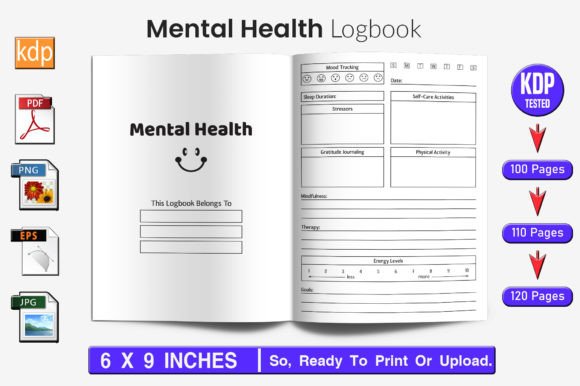
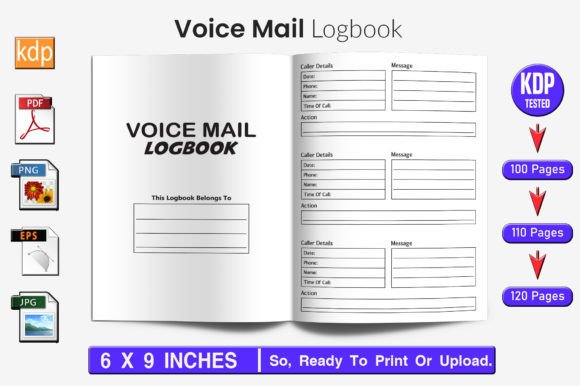
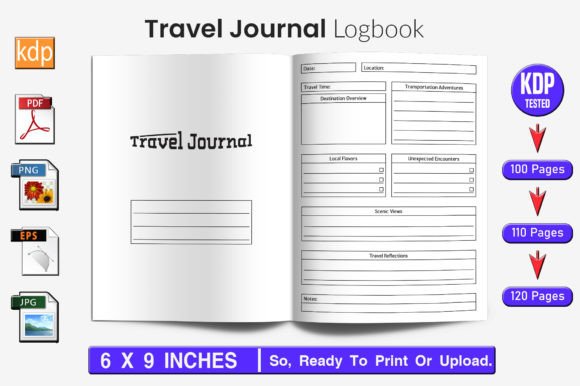
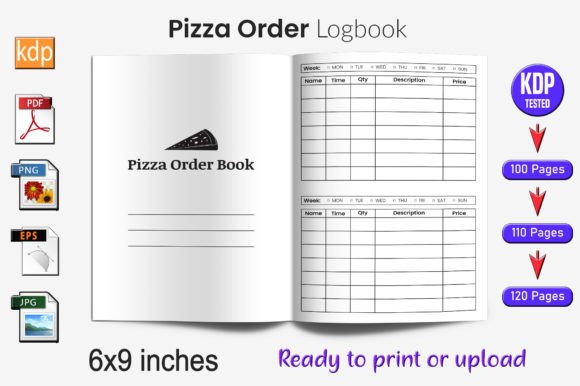
This isn’t just another generic logbook. It’s a precision-crafted, vector-based PDF interior built for real-world use — and real-world publishing success. Every page is editable in Adobe Illustrator, scalable without pixelation, and formatted to Amazon’s exact 6×9 inch trim size with 300 DPI resolution and no bleed. Whether you’re printing physical copies or uploading straight to KDP, it meets platform requirements out of the box.
Why This Matters — Depending on Who You Are
What makes this interior valuable changes dramatically depending on your role, goals, and experience level. Let’s break it down by perspective.
For Beginners Building Their First KDP Business
If you’re new to Kindle Direct Publishing, time and confidence are your scarcest resources. The Pizza Order Log Book KDP Interior removes two major barriers: design uncertainty and technical rejection risk. You don’t need Canva skills or Illustrator know-how to get started — just open the included EPS file, tweak colors or fonts if you like, and export a print-ready PDF. Because it’s been tested on KDP, you avoid common pitfalls like margin warnings, blurry text, or bleed errors that delay launch. One beginner used the 110-page version to publish her first three low-content books in under 48 hours — all live and selling within a week.
For Freelancers & Designers Serving Food Businesses
You might be creating custom order logs for local pizzerias or meal-prep startups. Here, flexibility matters more than speed. The vector format means you can resize headers, adjust spacing for bilingual entries (e.g., English + Spanish order fields), or add a client’s logo without quality loss. The transparent PNG and high-res JPG bonus files let you mock up social media previews or pitch decks instantly — no extra rendering time. One designer told us she reused the same interior across five different regional pizza brands, only changing colors and cover copy.
For Small Restaurant Owners & Delivery Coordinators
Your priority isn’t publishing — it’s organization. A clean, intuitive logbook helps track orders, staff shifts, ingredient usage, and customer notes without digital overload. The 100–120 page range gives breathing room for daily logs over several weeks, while the 6×9 size fits neatly on a counter or in a delivery bag. Since pages are editable, you can insert sections for tip tracking, driver notes, or allergy flags — all without hiring a developer or learning spreadsheet formulas.
For Educators & Culinary Instructors
In a food service class or hospitality workshop, students benefit from hands-on documentation practice. This interior provides a realistic, industry-aligned template for teaching order accuracy, timing discipline, and communication clarity. Instructors have printed it as a workbook supplement, added guided reflection prompts on select pages, or used the editable layers to build custom grading rubrics right into the layout. Its professional appearance also supports portfolio-building for students entering internships or job interviews.
What Makes It Stand Out — Beyond “Just Another PDF”
It’s not the number of pages that sets this apart — it’s how each element serves a purpose:
- Vector-based, not raster: Resize any element — from checkboxes to section headers — without blurriness. Perfect for adapting to larger notebooks or mini-planners.
- Multiple page counts: Choose 100, 110, or 120 pages based on your audience’s needs — fewer pages for quick-reference field logs, more for multi-week operational tracking.
- KDP-tested workflow: No surprises during upload. Files pass Amazon’s pre-flight checks for margins, resolution, and color mode (CMYK-ready).
- Bonus assets included: Transparent PNGs for digital overlays; high-res JPGs for website banners or ads; EPS for deep customization. All included — no upsells.
How to Know If It Fits Your Project
Ask yourself these questions — honestly:
- Are you prioritizing reliability over experimentation? If you’ve had KDP rejections before, or want your first launch to go smoothly, this interior reduces variables.
- Do you need control — but not complexity? You don’t need full design freedom, just enough to personalize branding, layout flow, or functional fields.
- Is your goal commercial, educational, or operational? This interior works across all three — whether you’re selling on Amazon, training staff, or streamlining daily orders.
- Do you value time-to-market? With editable files and clear instructions, going from download to published book can take less than an hour — assuming your cover is ready.
It’s not ideal if you need fully automated data capture (like Excel integration), multilingual auto-translations, or interactive digital features. But for print-first, clarity-first, and compliance-first use cases? It hits the mark consistently.
A Practical Example Across Roles
Consider Maria — a freelance graphic designer helping a family-run pizzeria launch branded merch and tools. She uses the Pizza Order Log Book KDP Interior as a base, swaps in their signature red-and-yellow palette, adds their logo to the header, and inserts a “Special Requests” column tailored to their gluten-free and vegan options. She exports two versions: one for KDP (print-ready PDF), and another as a printable PDF for the shop’s front counter. Meanwhile, the owner uses the same interior — unedited — to train new staff on order documentation standards. Same file. Two distinct, effective outcomes.
That kind of versatility — grounded in technical readiness and thoughtful structure — is why creators keep returning to this interior. It doesn’t try to do everything. Instead, it does exactly what it promises: deliver a clean, adaptable, KDP-ready foundation for pizza-related logging — no fluff, no friction, no failed uploads.