Meal Planning Printable KDP Interior
Meal Planning Printable KDP Interior is a ready-to-use, professionally designed 109-page interior file optimized for Amazon Kindle Direct Publishing (KDP). It’s not just a collection of blank pages—it’s a thoughtfully structured, print-ready resource built for real-world use: meal tracking, weekly planning, grocery list generation, nutrition logging, and family scheduling. Every page balances clarity with flexibility, giving users room to write, reflect, and adapt—without overwhelming them with clutter.
Why This Matters—Depending on Who You Are
What makes this interior valuable shifts depending on your role, goals, and daily rhythm. A busy parent juggling school drop-offs and work deadlines needs something fast, intuitive, and forgiving of last-minute changes. A freelance designer building digital products wants clean vector layers and editable source files they can repurpose across client projects. An educator teaching life skills might look for visual consistency and space for student annotations. And a small business owner preparing print-on-demand planners cares deeply about bleed-free margins, 300 PPI resolution, and KDP-compliant formatting.
For Busy Moms & Home Managers
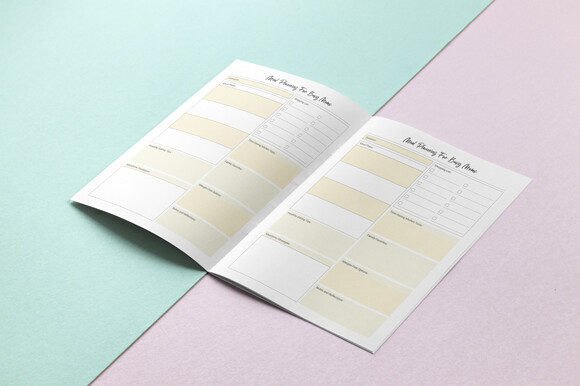
If your week runs on coffee, sticky notes, and constant recalibration, this interior helps you reclaim time—not add more steps. The 8.5 x 11 inch size fits standard home printers and binders. No bleed means no guessing whether your grocery list will get cut off at the edge. Pages include intuitive sections like “Meals This Week,” “Pantry Check-In,” and “Leftovers Tracker”—designed to reduce decision fatigue, not increase it. You don’t need design skills or software: open the PDF, print, and start using it the same day. Many moms report cutting their weekly grocery time by 20–30 minutes once they stop re-creating the same lists from scratch.
For Creators & Digital Product Sellers
This isn’t just a printable—it’s a production-ready asset. You receive editable Adobe Illustrator (.ai) source files alongside layered PDF, JPG, PNG, and even PPTX versions. That means you can tweak colors, swap fonts, insert your brand logo, or extract individual pages for social media templates or email opt-ins. Because it’s built to KDP specs—including proper margins, gutter allowances, and CMYK-safe color profiles—you avoid common upload rejections. One indie planner creator used the base layout to build three niche variations (vegan, keto, and budget-conscious), uploading all to KDP within two days. No custom design hours. No back-and-forth with contractors.
For Educators & Coaches
In classrooms, wellness workshops, or parenting groups, consistency matters. This interior provides a neutral, professional foundation that doesn’t distract from your teaching goals. The high-resolution (300 PPI) output ensures crisp text and clean lines—even when projected or printed in bulk. Some home economics teachers print single-page handouts for “Meal Prep 101” lessons; others bind full copies as take-home toolkits. Because the layout avoids heavy graphics or fixed imagery, students can personalize entries without feeling boxed in. One nutrition coach uses the “Weekly Reflection” pages as guided journal prompts during 1:1 sessions—helping clients connect food choices to energy, mood, and sleep patterns.
For Small Business Owners & Local Print Shops
Ready-to-print doesn’t mean generic. The absence of bleed, precise trim size (8.5 x 11 inches), and CMYK-ready files mean your local print shop can produce physical copies reliably—no extra prep, no color surprises, no wasted test prints. That saves time and material costs. If you run a wellness studio, café, or community center, you can offer branded versions (using the .ai file) as part of a membership package or workshop bundle. One bakery owner included a simplified version—just the meal grid and shopping list—as a free download with online orders, increasing email sign-ups by 17% in one quarter.
What Makes It Work Across Skill Levels
Beginners appreciate the lack of setup friction: open, print, go. There’s no learning curve, no app to download, no subscription. Experienced users value the editable layers—being able to isolate a header, adjust spacing, or export a single chart for a blog post. Hobbyists enjoy the creative freedom: coloring the borders, adding stickers, or scanning handwritten notes into digital archives. Professionals care about fidelity—how well the lines hold up when photocopied, how legible the font remains at small sizes, whether checkboxes align cleanly across pages.
Practical Use Cases—Real Examples
- A freelance writer uses the “Daily Prep Notes” page to batch-cook meals every Sunday, then snaps photos of her filled-in pages to share on Instagram Stories—building credibility without staging elaborate flat lays.
- A homeschool parent prints two copies: one for meal planning, another for assigning kitchen chores. She adds Velcro dots to the “Who Cooks Tonight?” section so her kids can move name cards around.
- A dietitian imports the PDF into GoodNotes, adds voice memos to each week’s reflection page, and shares annotated versions with clients between appointments—extending care beyond the session.
- A stationery shop owner prints 20 copies on recycled matte paper, binds them with kraft twine, and sells them locally as “Weeknight Rescue Kits”—pairing each with a set of recipe cards.
How to Know If It Fits Your Needs
Ask yourself: Do you need something you can use *today*, not after watching three tutorials? Is reliability more important than flashy animations or AI-generated suggestions? Do you prefer having full control over formatting—or would you rather trust a pre-tested layout? If you’re building for commercial use, does the license allow resale or customization? (This interior includes commercial rights for digital and physical distribution.) If long-term usefulness matters, consider whether the structure supports growth: can you add pages? Remove sections? Reorder based on season or life stage?
This interior won’t replace deep nutritional knowledge or eliminate all food-related stress—but it does remove one consistent point of friction. It meets people where they are: tired, time-pressed, creatively inclined, or quietly determined to do things a little more intentionally. Whether you’re printing one copy for your fridge or scaling to hundreds for your Etsy store, the core function stays the same—making meal planning feel less like a chore, and more like a choice you own.