CrossFit Planner Kdp Interior Template
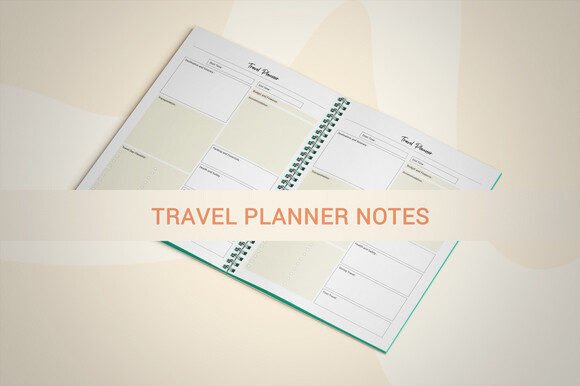
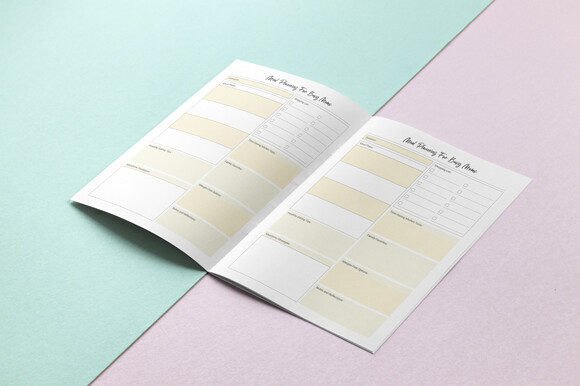
If you're designing a CrossFit planner for personal use, coaching clients, or launching a KDP business, the CrossFit Planner Kdp Interior Template is more than just a layout—it’s a production-ready foundation built to save time, avoid printing errors, and meet platform requirements without guesswork. At 8.5 x 11 inches with no bleed, high-resolution 300 ppi output, and full editable source files (AI, PDF, JPG, PNG, PPTX), it’s engineered for flexibility across contexts—whether you’re logging daily WODs, managing athlete progress, or publishing a polished paperback on Amazon.
Why This Template Solves Real Problems—Not Just Aesthetic Ones
Many creators assume any printable planner layout will work for KDP—or worse, they start from scratch in Canva or Word, only to hit roadblocks at upload: margins too tight, fonts not embedded, color profiles mismatched, or pages rejected for low resolution. The CrossFit Planner Kdp Interior Template eliminates those issues by default. Its 109-page PDF interior is pre-formatted to KDP’s exact specifications—correct trim size, proper gutters, CMYK-ready colors, and optimized text hierarchy. That means fewer revisions, faster approvals, and no last-minute scrambles to fix bleeds or font substitutions.
Common Oversights—and What They Actually Cost You
Mistake #1: Assuming “printable” means “KDP-ready.” A beautifully designed PDF may look crisp on screen but fail KDP’s automated checks if it lacks embedded fonts, uses RGB instead of CMYK, or includes transparency layers that don’t flatten correctly. One creator spent three weeks reformatting a 60-page planner after KDP rejected it twice—not for content, but because the background texture was saved as an unflattened PSD layer. The CrossFit Planner Kdp Interior Template ships with all assets flattened, fonts embedded, and color profiles verified, so your file passes on the first try.
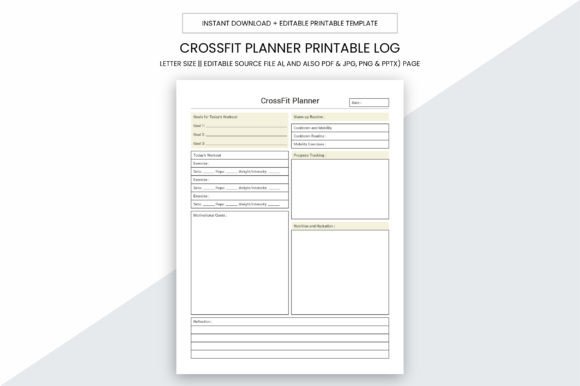
Mistake #2: Overlooking usability in favor of aesthetics. Some planners cram in too many sections—daily nutrition logs, weekly mindset prompts, monthly macro trackers—all competing for attention. That overwhelms beginners and dilutes focus. This template keeps structure purposeful: clean WOD tracking, scalable progress charts, recovery notes, and space for technique cues—not filler. It’s designed so users actually return to it, not abandon it after Week 2.
Mistake #3: Downloading low-res files and assuming scaling fixes everything. A 72 ppi JPG upscaled to 300 ppi won’t gain detail—it’ll just blur. Print quality suffers, especially on textured paper or when binding. The CrossFit Planner Kdp Interior Template delivers native 300 ppi files across formats, meaning crisp lines, legible small text, and sharp bar graphs—even when printed locally or shipped bulk to gyms.
What to Verify Before You Use or Sell It
Before opening the AI file or uploading to KDP, check these three things:
- Your editing software supports the file type. Adobe Illustrator CC 2020+ works reliably with the .ai source. If you only have older versions or free alternatives, use the included PDF or PPTX—both retain full editability for text and layout adjustments.
- All fonts are either embedded or substituted consistently. The template uses standard system-safe fonts (like Montserrat and Roboto) that render cleanly across devices and printers. If you swap in a custom font, confirm it’s licensed for commercial use—and embed it before final export.
- You’ve tested a single-page print. Even with perfect specs, local printers vary. Run one page on your target paper stock first—check alignment, contrast, and bleed-free margins. The no-bleed design means nothing gets cut off, but paper shrinkage or feed variance can still shift registration slightly.
How to Adapt It—Without Breaking Functionality
This isn’t a rigid “one-size-fits-all” layout. Its modularity lets you tailor it responsibly:
- For coaches: Duplicate the “WOD Review” page and rename it “Client Notes.” Add checkboxes for mobility work or breathing cues—keeping the same spacing and grid so it flows visually with the rest.
- For KDP sellers: Swap out placeholder cover copy with your brand voice—but keep headers at the same point size and weight. Consistency builds perceived professionalism, and KDP’s algorithm favors titles with strong interior coherence.
- For personal use: Hide or delete unused sections (e.g., “Business Goals” if you’re not running a gym). The layered AI file makes toggling visibility fast—no need to rebuild from zero.
Avoiding the “Too Much, Too Soon” Trap
It’s tempting to load every possible CrossFit-related feature into your planner: metabolic conditioning trackers, supplement logs, sleep diaries, even affiliate marketing prompts. But research shows users engage most deeply with tools that support *one clear behavior*—like consistent WOD logging or progressive overload tracking. The CrossFit Planner Kdp Interior Template focuses on that core loop: plan → execute → reflect → adjust. Extra pages are available, but they’re optional—not baked into every spread. That balance helps prevent decision fatigue and increases long-term adherence.
Real-World Value Beyond the File
This template saves more than design time. For small gym owners, it cuts the cost of hiring a designer ($200–$600) and speeds up launch timelines by 2–4 weeks. For educators or trainers creating supplemental materials, it ensures consistency across handouts, slide decks, and printed workbooks—because the PPTX and PDF share identical styling. And for KDP entrepreneurs, having a proven, rejection-resistant interior means you can test pricing, covers, and marketing angles faster—without waiting on formatting fixes.
Final Thought: Clarity > Complexity
The best planners don’t impress with complexity—they earn trust through reliability. When your athletes see clean, consistent pages week after week, when your KDP book gets approved on the first upload, when you open the file and know exactly where to add today’s benchmark score—that’s when the CrossFit Planner Kdp Interior Template earns its place. It’s not about doing less. It’s about removing friction so you can focus on what matters: movement, progress, and real results.