2024 Mood Tracker Canva KDP Interior
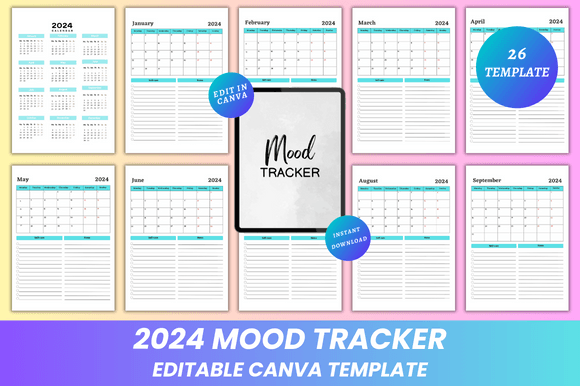
The 2024 Mood Tracker Canva KDP Interior is a printable and editable digital planner designed for creators preparing mood-tracking journals for sale on Amazon Kindle Direct Publishing (KDP). It includes 26 fully customizable pages—12 monthly calendar spreads (January through December 2024), six dedicated mood and wellness tracking pages (including “Today I Felt,” “Stress Tracker,” “Anxiety Tracker,” and “Notes”), and supporting elements like a “Belongs To” page and “Thank You” page. All pages are formatted to A4 size (8.3 × 11.7 inches), with no bleed, and delivered as high-resolution print-ready PDFs, plus JPG and PNG files.
This interior is built for flexibility: users receive an editable Canva link that allows changes to fonts, colors, layout spacing, text size, and image placement—including the option to insert personal photos or icons. That makes it suitable both for self-use and for commercial adaptation by KDP publishers who need clean, professional interiors that meet Amazon’s formatting requirements.
People often explore the 2024 Mood Tracker Canva KDP Interior when they’re launching or updating a mental wellness journal series. Its appeal lies in balancing structure and adaptability—offering pre-designed, cohesive layouts while avoiding rigid lock-in. For example, someone building a low-cost, high-volume KDP catalog may value the time saved by starting from a consistent, tested template rather than designing each interior from scratch.
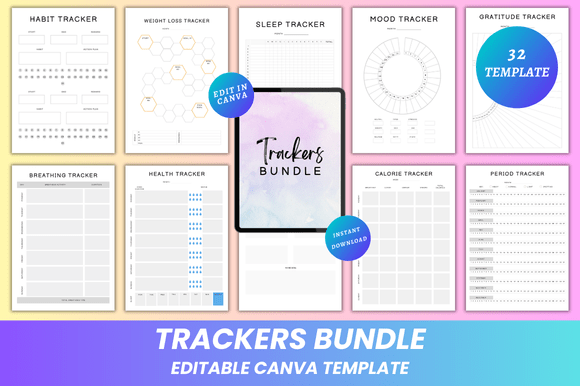
One key benefit is efficiency. With instant download and lifetime access, creators can begin editing immediately after purchase. The inclusion of multiple tracker types—stress, anxiety, gratitude, daily reflection—supports diverse audience needs without requiring separate templates. The minimal, uncluttered aesthetic also aligns well with current design preferences in the wellness niche, helping interiors appear polished and accessible across age groups.
However, there are practical tradeoffs. Because the template is optimized for Canva, users must have a Canva account (free or Pro) and basic familiarity with its interface. While most edits—like changing font color or resizing headers—are straightforward, more complex adjustments (e.g., reordering page sequences or adding new sections) may require manual workarounds. Additionally, although the files are print-ready, users remain responsible for verifying final output against KDP’s latest specifications—especially regarding margins, resolution (300 DPI), and file naming conventions.
Another consideration is scope. This interior focuses specifically on mood and emotional tracking—not habit formation, goal setting, or time blocking. If your intended journal aims to support behavior change (e.g., sleep routines or medication adherence), you’d likely need to supplement this interior with additional pages or choose a broader-planner template instead.
The 2024 Mood Tracker Canva KDP Interior is a strong fit when your goal is to publish a focused, emotionally grounded journal quickly and consistently. It works especially well for creators who already use Canva, prioritize visual cohesion across titles, or plan to release multiple variations (e.g., themed editions with different color palettes or cover designs). Its A4 sizing also supports international markets where A4 is standard—though U.S.-based sellers should confirm whether their target audience prefers Letter (8.5 × 11 inches) before finalizing.
Conversely, alternatives may be preferable in certain cases. If you require full control over typography—such as embedding licensed fonts or using OpenType features—you’ll find Canva’s font library limiting compared to desktop publishing tools like Adobe InDesign. Similarly, if your workflow depends on automation (e.g., batch-generating personalized versions), static Canva links won’t integrate with scripting tools. In those situations, professionally designed layered PDFs or InDesign templates—while often more expensive and less intuitive—offer greater technical flexibility.
Also consider long-term maintenance. While the product states “new designs are constantly being added,” updates aren’t versioned or documented publicly. If you’ve customized a prior version and a future update changes underlying structure (e.g., renaming layers or adjusting grid alignment), reapplying edits may take extra time. For mission-critical launches, some creators prefer stable, one-time-purchase templates with clear revision histories.
From a content strategy perspective, pairing this interior with strong, keyword-aligned titles and subtitles improves discoverability on Amazon. Phrases like “2024 mood journal,” “anxiety tracker printable,” or “editable Canva KDP interior” reflect how potential buyers search—and help ensure your listing surfaces alongside related terms. Since KDP’s algorithm weighs relevance and conversion history, using a well-structured interior that encourages consistent user engagement (e.g., via intuitive tracker layouts) can indirectly support better rankings over time.
Practically speaking, evaluate whether your goals match the template’s strengths. Ask yourself: Do I need to ship multiple journal variants within a short timeframe? Am I comfortable making visual edits in Canva rather than coding or using advanced layout software? Is emotional reflection—not productivity or scheduling—the central theme of my book? If the answer to all three is yes, the 2024 Mood Tracker Canva KDP Interior offers a balanced foundation: functional, adaptable, and purpose-built.
Finally, remember that interior quality alone doesn’t guarantee success on KDP. It works best when paired with thoughtful cover design, accurate categorization, realistic pricing, and clear description copy that sets expectations about usability (e.g., noting it’s editable in Canva, not Microsoft Word). Readers who understand exactly what they’re getting—and how to use it—are more likely to leave positive reviews, which in turn reinforce visibility and trust.
If your aim is to create a compassionate, visually calm, and structurally sound mood journal for 2024—without sacrificing creative control or production speed—the 2024 Mood Tracker Canva KDP Interior provides a practical starting point. Just be sure your workflow, technical comfort level, and publishing goals align with its design assumptions before integrating it into your process.